
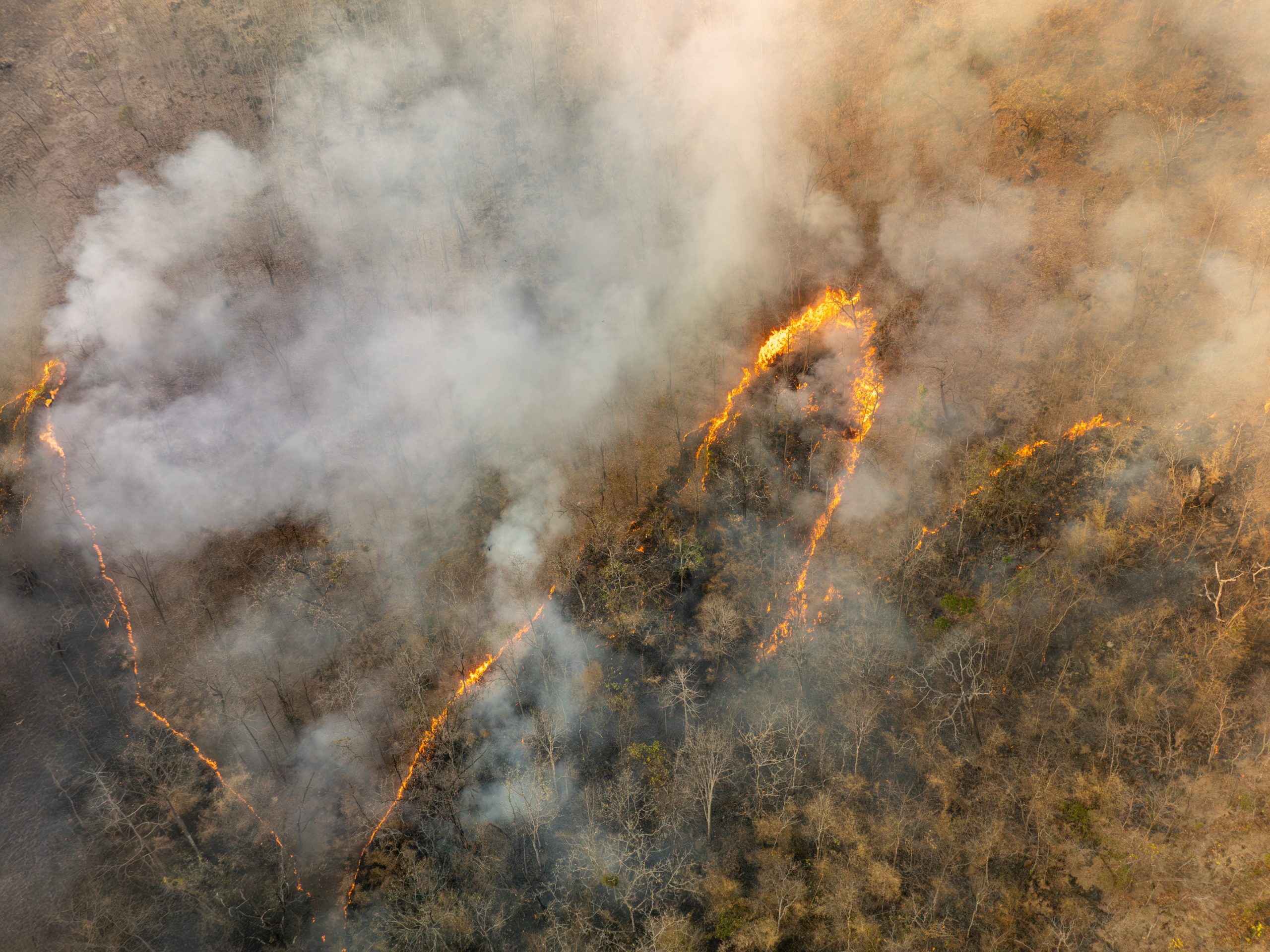
When we think of wildfire damage, we often picture burned trees and blackened hillsides. But long after the flames are out, wildfire smoke can continue to affect homes, even miles from the burn area.
Wildfire smoke contains a complex mix of gases and fine particles that can settle indoors and linger on surfaces. Some of these residues can continue to release contaminants for weeks after a fire, affecting air quality and health.
At Wildfire Partners, our focus is helping homeowners reduce ignition potential through mitigation. But we also recognize that smoke exposure is an ongoing concern, especially for residents who experience repeated smoke events. The information below draws on guidance from air quality experts to help you reduce smoke impacts and find credible sources for deeper learning.
Preparing for smoke exposure near wildfires
Wildfire smoke can affect air quality many miles from a fire, and conditions can change quickly. Even if you aren’t in the evacuation area, taking steps ahead of time can help protect your health and keep your home’s indoor air cleaner during smoke events.
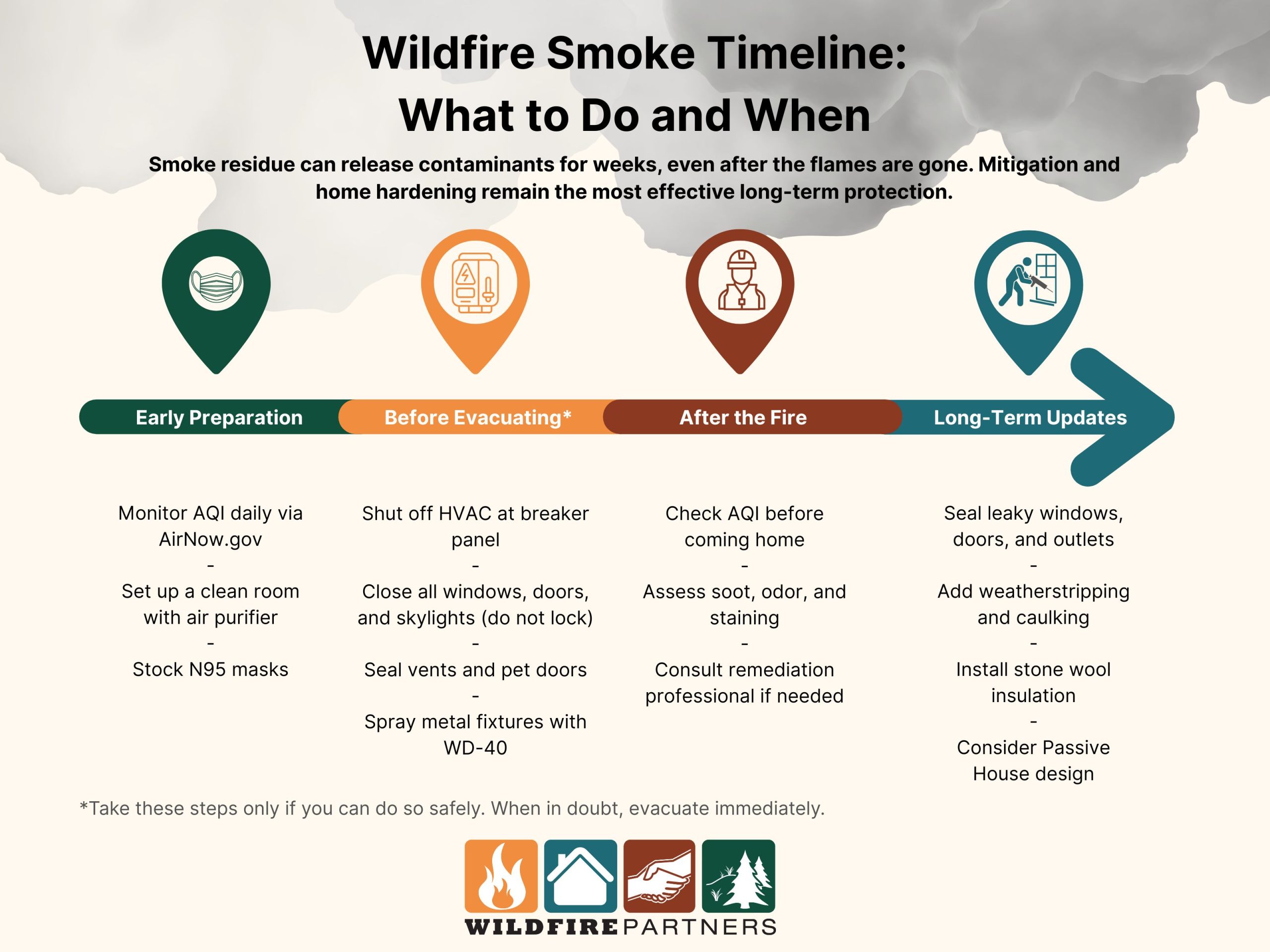
- Monitor air quality: Use tools like AirNow.gov or Fire.AirNow.gov to track the Air Quality Index and fine particulate matter.
- Stay indoors: Keep doors and windows closed and use your air conditioner in recirculate mode to limit the amount of outdoor air coming in.
- Reduce indoor air pollutants: Consider using a high-efficiency air filter or portable air cleaner in either your whole house or a designated “clean room”.
- Protect yourself outdoors: Limit outdoor activity, especially for vulnerable groups like children, the elderly, or those with respiratory issues. If you must go outside, wear a properly fitted N95 respirator.
For full details, visit the Living With Smoke website.
Steps to take within one hour of evacuation
If you are evacuated during a wildfire and have time before leaving, experts recommend taking these actions within an hour of evacuation:
- Turn off your HVAC system. Shut down heating, ventilation, and air conditioning systems at the breaker panel. Do the same for radon mitigation systems or any exhaust fans that could pull smoky air indoors.
- Close (but don’t lock) openings. Shut all doors, windows, and skylights, but leave them unlocked for firefighter access if needed.
- Seal easy entry points. Cover vents, pet doors, or other openings to reduce how much smoke and soot can enter your home.
- Protect metal fixtures. Lightly spray metal surfaces in bathrooms and kitchens with a moisture-displacing lubricant (such as WD-40) to help prevent corrosion from acidic soot.
After the Fire: Smoke Cleanup and Risk Reduction
If your home was exposed to smoke, residue may linger on furniture, insulation, and HVAC systems. Smoke residues can continue to release contaminants weeks after a fire, particularly in homes that experienced heavy smoke exposure.
For more detailed guidance, check out these resources from national experts:
- Homeowner’s Guide to Risk Reduction and Remediation of Residential Smoke Damage
- Wildfires and Indoor Air Quality (IAQ) | U.S. Environmental Protection Agency (EPA)
Because smoke damage can vary greatly depending on how close your home was to the fire and what materials burned, consider consulting a qualified remediation professional if you notice heavy soot, strong odors, or visible staining.
Long-Term Improvements to Reduce Smoke Infiltration
Making your home more airtight not only improves energy efficiency, it also limits how much smoke can enter during future wildfire events. Consider upgrades such as:
- Installing continuous noncombustible insulation (like stone wool) under siding or roofing.
- Sealing leaky windows, doors, and outlets.
- Adding weatherstripping or caulking to reduce gaps.
- Incorporating Passive House or tight-building design features for long-term efficiency and comfort.
Mitigation Still Comes First
Reducing smoke exposure is important, but the most effective way to minimize wildfire risk is through home hardening and defensible space. Homeowners can reduce both the chance of ignition and the severity of smoke events through mitigation actions.
If you’d like to schedule a Wildfire Partners home assessment or learn more about our mitigation programs, visit WildfirePartners.org.
Comments are closed.